Sexual Relationships
Adolescence is a time of curiosity and sexual exploration. With the onset of puberty, adolescents find themselves engaging in activities arising from strong desires, curiosity, and attractions. Such desires and needs for intimacy can be expressed in several ways, including physically or emotionally. It is normal to be curious about sexual feelings and desires. However, it is also important to know to assert your boundaries and not be influenced by the perspectives or actions of your peers to engage in actions that you are not ready for. It is important to remember that any type of sexual activity needs to be consensual. It is NOT okay for anyone to force or coerce you to engage in any type of sexual behaviour.
Types of Sexual Activity
When individuals refer to the term “sex”, it generally means vaginal intercourse, but it has other types too. Any sexual activity often, but not always, results in orgasm (for one or both partners). Orgasm is the height of sexual activity, often referred to as climax, which is felt as an intensely pleasurable release of tension in the body and the genitals.
Vaginal sex
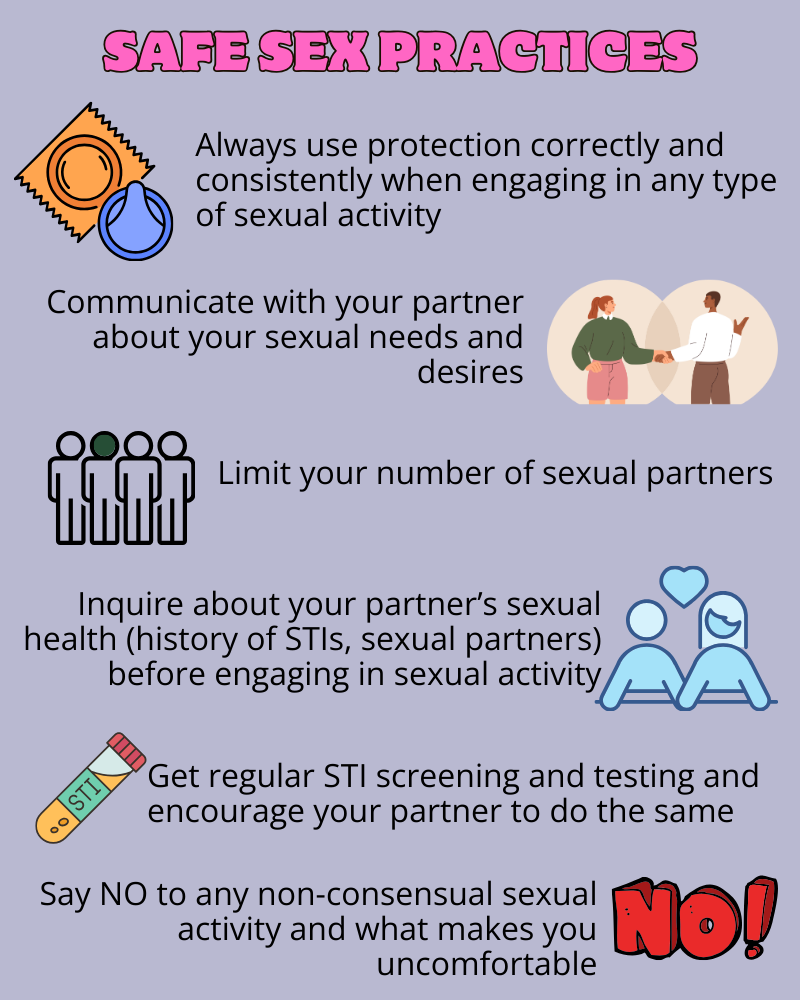
Vaginal intercourse refers to the insertion of a penis into a partner’s vagina. During vaginal intercourse, chances are high that pregnancy can occur, if a sperm (contained in semen) fertilizes an egg (released by the ovary). This can happen if semen is introduced into the vagina, which occurs when protection (e.g., condoms) is not used. Using contraceptive measures (birth control) can reduce the chances of pregnancy and some can prevent sexually transmitted infections (STIs).
Oral sex
Oral sex involves using the mouth or tongue on a partner’s genitals to stimulate pleasure. The exchange of fluids through this type of sexual activity can also transmit infections (STIs).
Anal sex
Anal sex involves the insertion of a penis into another person’s anus (butthole). It can also lead to STIs.
Masturbation
Masturbation refers to the touching of one’s genitals for pleasure.
What is Sexual Arousal?
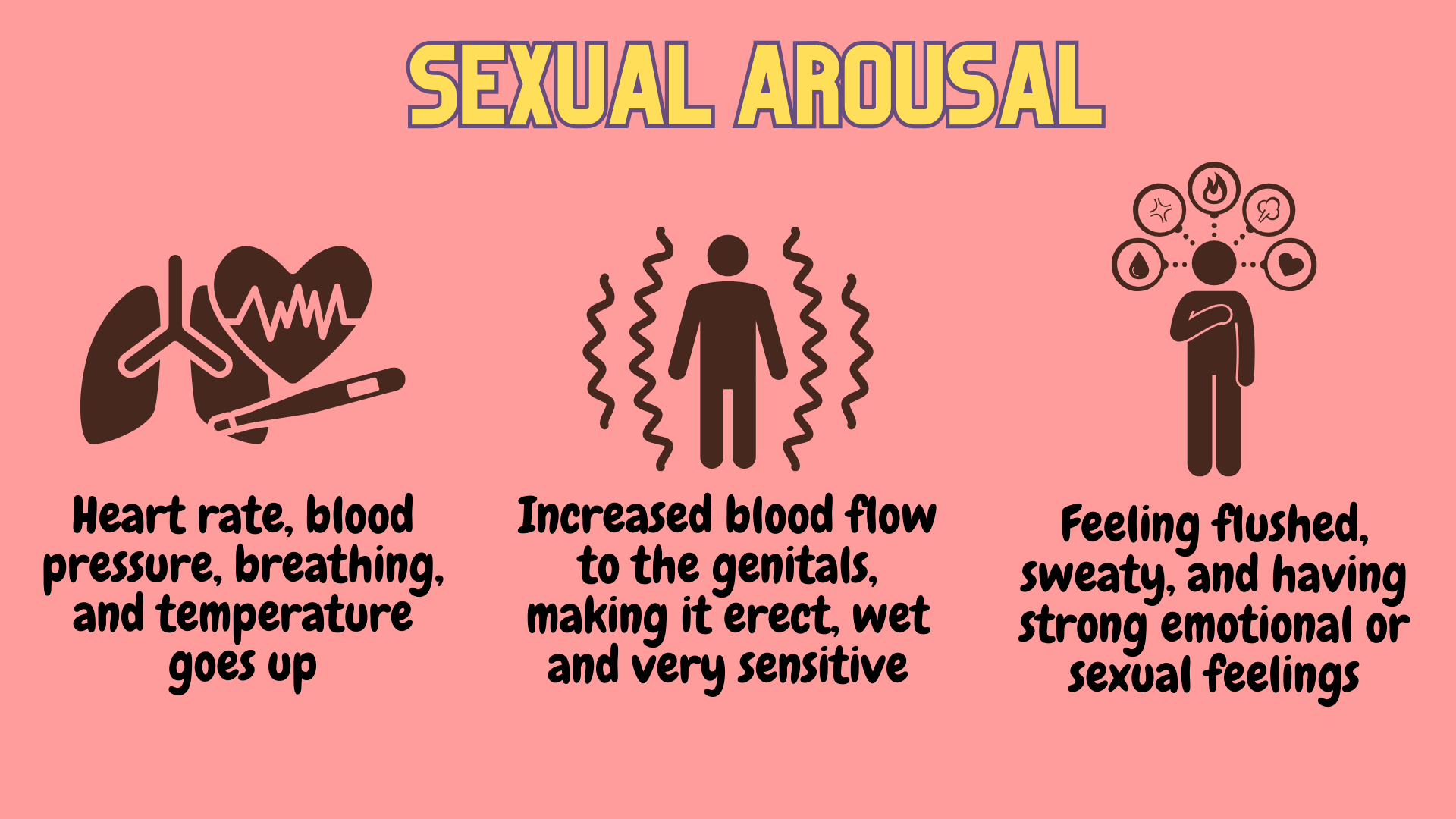
Sexual arousal or “being turned on” is a natural response of the body to sexual thoughts, feelings, and impulses. It is your body’s way of preparing to engage in sexual activity and reproduction. It can happen while engaging in sexual activity or even with having sexual thoughts or feelings. With the onset of puberty, you may experience various physical and emotional changes associated with sexual arousal. Some of them include:
What is Safe Sex?
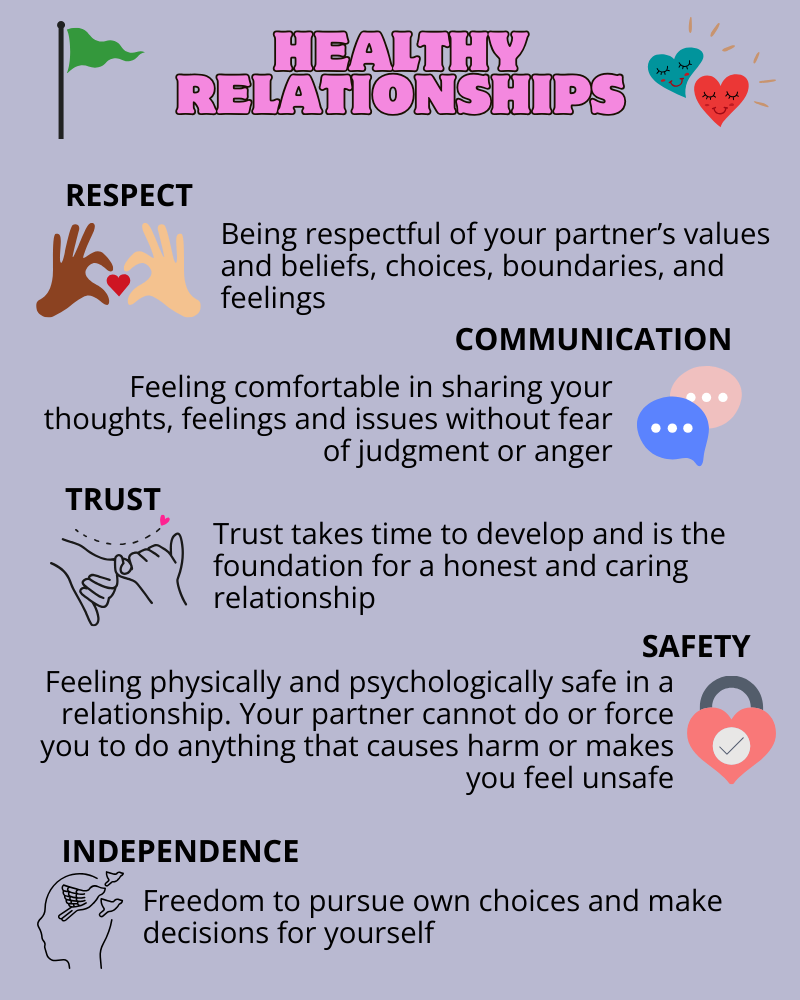
What are Healthy Relationships?
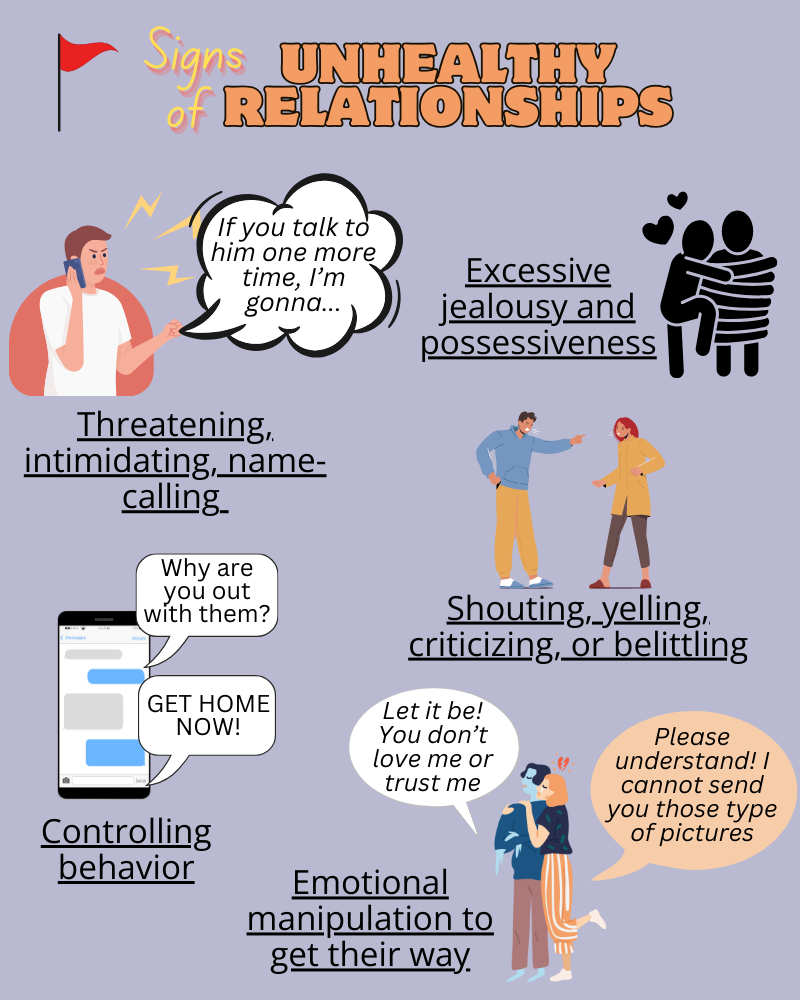
What are Unhealthy Relationships?
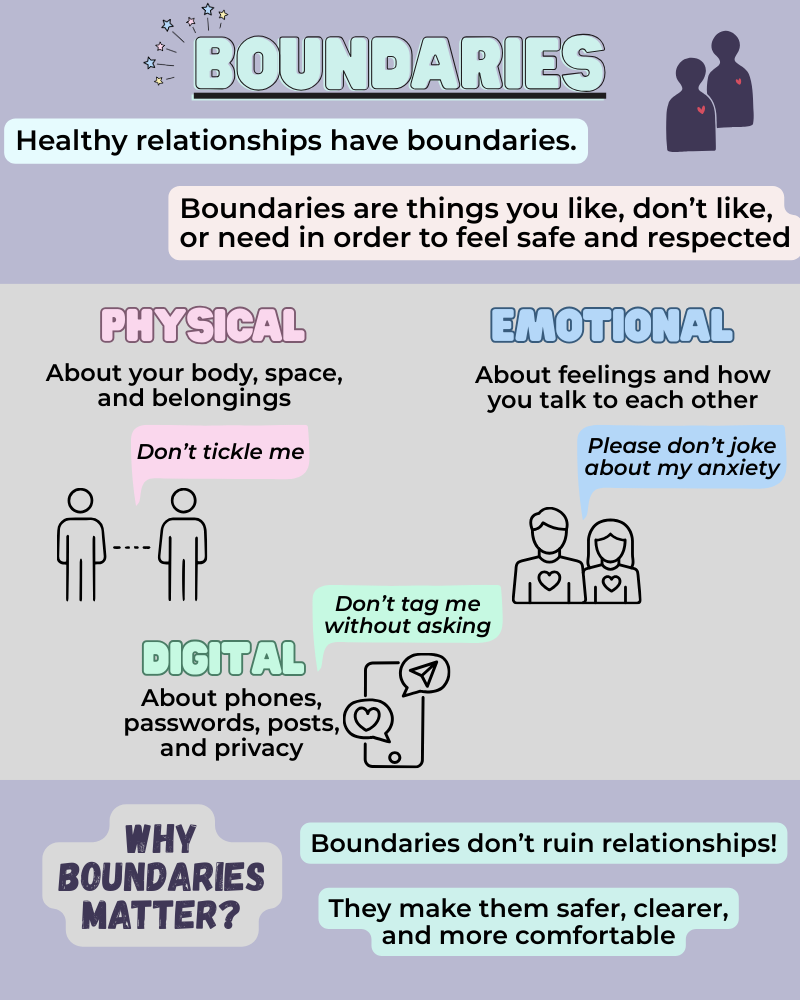
What are Boundaries?
Boundaries are an essential part of any relationship, whether it be romantic or friendly. While you might feel like setting boundaries could ruin the magic or limit a relationship, it’s actually a very healthy practice that can make a relationship more comfortable for you and for your partner.
Conflict and Relationships
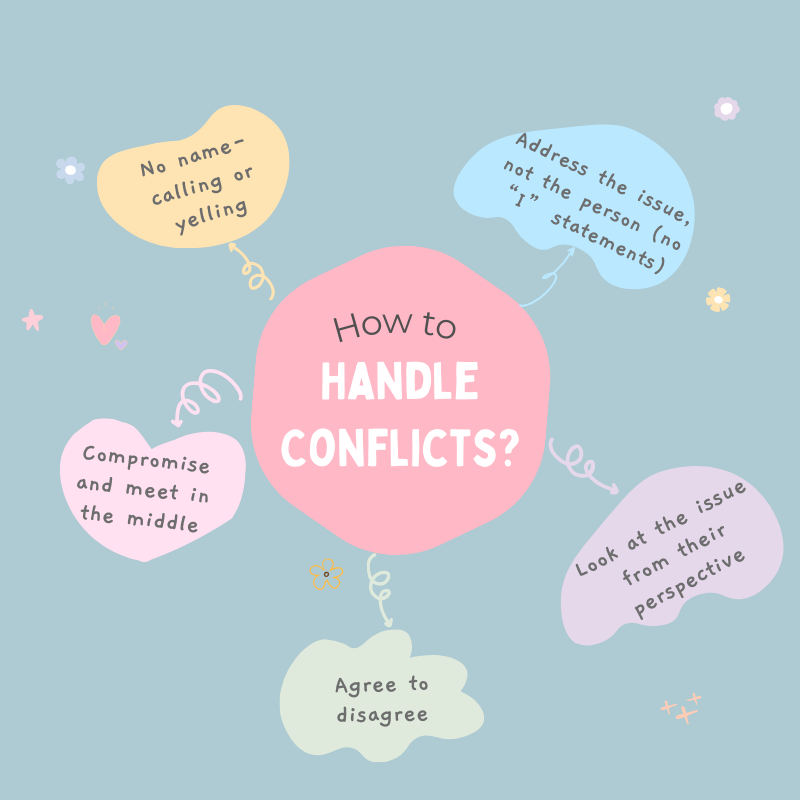
Conflict is a normal part of every relationship, romantic or not. Conflicts usually happen when one person’s wants, needs, or expectations have not been met. While conflict is normal, there are warning signs that the relationship might not be healthy.
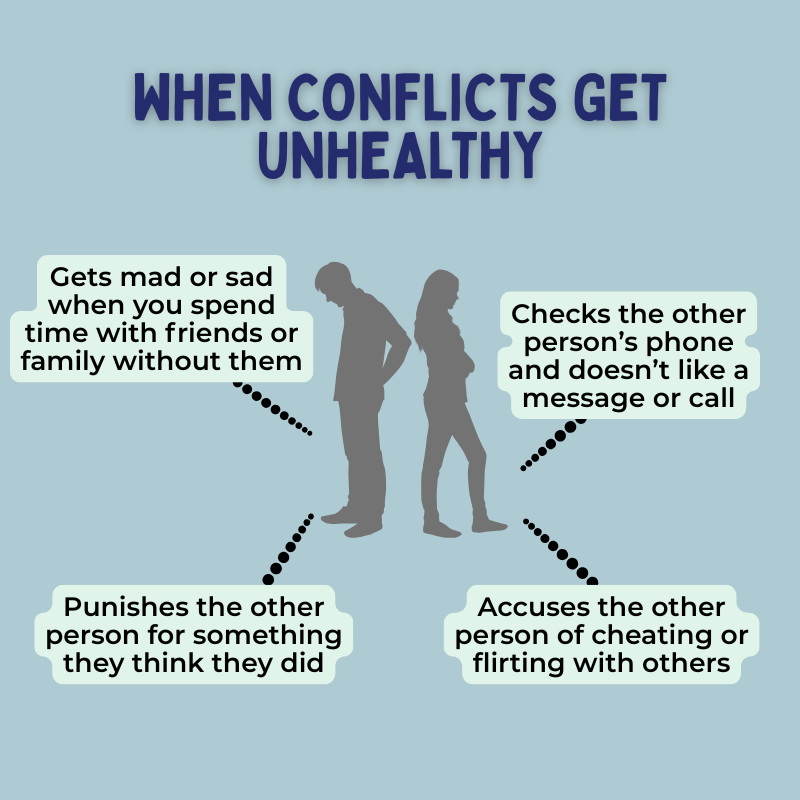
When conflicts arise, they can be explosive and hurtful, but if everyone remains calm and communicates effectively, they can also be opportunities to get to know each other better and grow from the experience.
Online Relationships
In online relationships, you still have the same rights to consent as you do in in-person relationships. You must always ask for consent before starting online intimate activities like sexting, and the other person must likewise ask you for consent before starting online intimate activities.
You can end an online relationship at any time and ask the other person not to contact you anymore, and they must respect that choice. You can also block them! If you have asked someone to stop contacting you and they keep messaging you, commenting on your posts, emailing you, or find other ways to keep contacting you, and you start to feel unsafe, this becomes criminal harassment and is against Canadian law.
Rejection
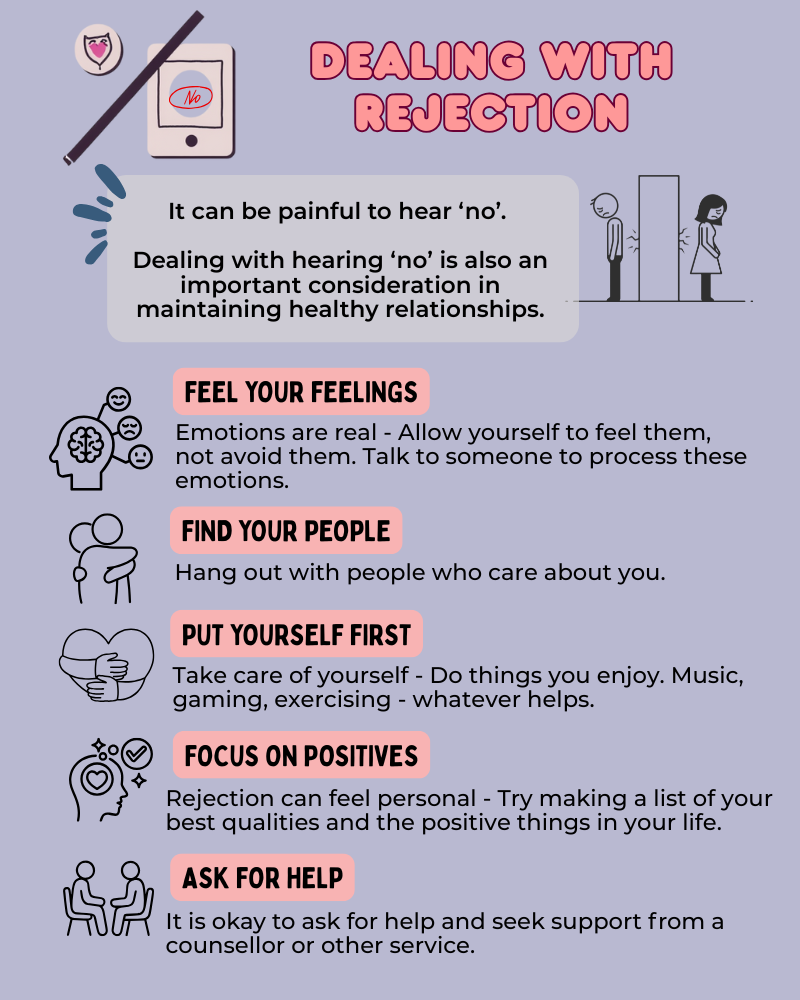
Saying no to someone who would like to spend time with you as a friend or partner can be difficult to do. It is important that we are able to respect our own boundaries and be considerate of others’ feelings.